

In today’s world, ensuring the purity of the milk you consume is more important than ever. With common milk adulterants like water, detergent, starch, urea, and synthetic milk entering the supply chain, knowing how to test milk at home can protect your family’s health.
The good news? You don’t need any special equipment—just simple household methods.

Here are 10 easy tests to help you identify pure milk at home.
1. The Water Test
One of the most common adulterants in milk is water.
How to do it:
Take a drop of milk and place it on a clean, slanted surface.
Result:
- If it flows quickly, leaving a watery trail — it’s diluted.
- If it stays or flows slowly — the milk is purer.
2. The Boiling Test
Boiling pure milk thickens slightly and gives a creamy layer.
How to do it:
Boil the milk.
Result:
- Pure milk forms a thick, creamy layer (malai) on top.
- Adulterated milk forms thin foam and little cream.
3. The Soap/Detergent Test
Mix a small amount of milk with water and shake well.
How to do it:
Shake milk in a bottle.
Result:
- Excess foam or bubbles mean detergent may be present.
- Pure milk produces very little foam.
4. The Vinegar (Acidity) Test
Milk can turn sour due to acidity or spoilage.
How to do it:
Heat a small quantity of milk and add a few drops of vinegar or lemon juice.
Result:
- Pure milk curdles naturally.
- Synthetic milk does NOT curdle and stays soapy.
5. The Starch Test
Some sellers add starch to make milk look thicker.
How to do it:
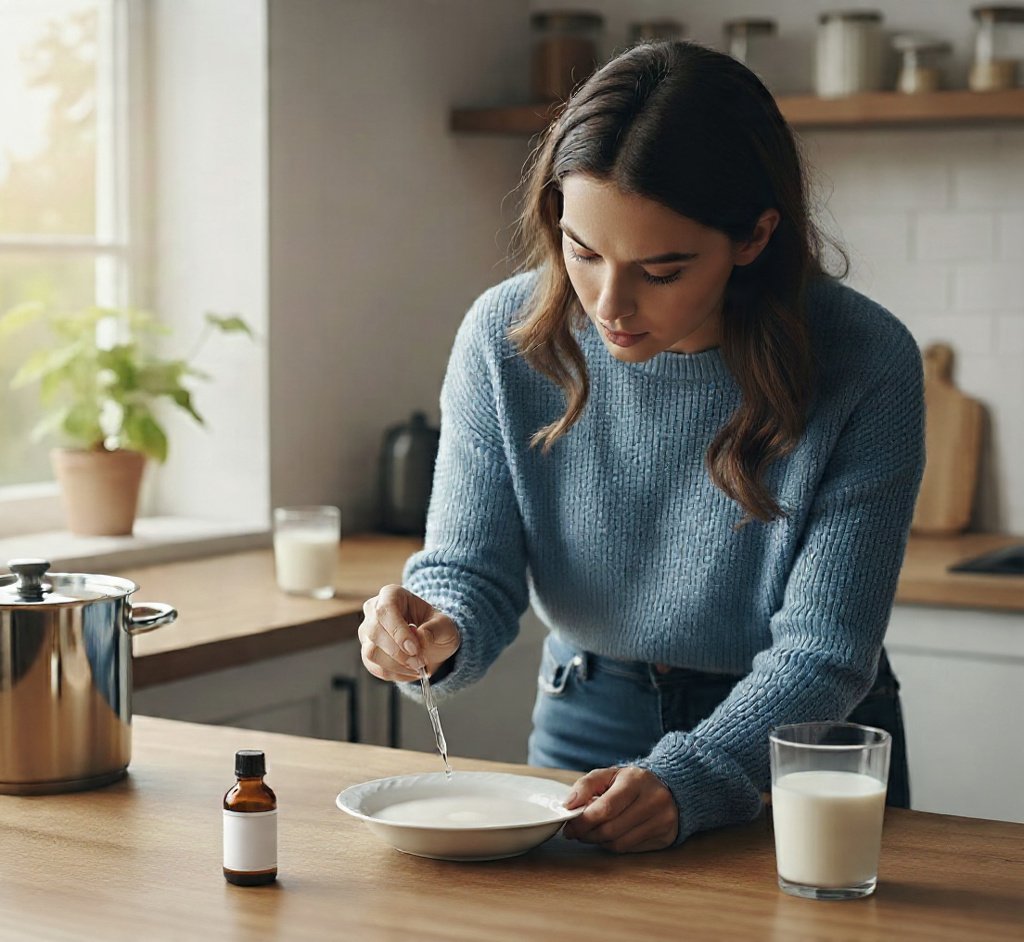
Add 2–3 drops of iodine (from a first aid kit) to a milk sample.
Result:
- Blue coloration = starch present.
- No color change = starch-free, purer milk.
6. The Urea Test
Some sellers add urea to make milk appear richer in protein.
How to test at home:
How to do it:
Add ½ teaspoon of soybean or arhar dal powder to the milk and heat.
Result:
- Rapid darkening means urea adulteration.
- No change means safer milk.
7. The Paneer Test
Heat the milk in a pan, then add lemon juice or vinegar.
Adulterated milk may form sticky, rubbery, or brittle paneer
Pure milk forms soft, uniform paneer
How to do it:
Add a few drops of vinegar to the milk.
Result:
- If it fizzes — chalk may be present.
- No reaction = purer milk.
8. The Synthetic Milk Test
Synthetic milk is made by mixing chemicals and non-dairy fats to mimic real milk. Detecting it at home is crucial.
How to do it:
Rub a drop of milk between your fingers.
Result:
- Soapy feel = synthetic milk.
- Smooth, creamy feel = real milk.
9. The Ghee Test (For A2 Milk Users)
If you are consuming A2 milk (like Desi Cow A2 Milk), the ghee it produces is a great indicator of purity:
How to do it:
Make homemade ghee.
Result:
- Pure milk gives aromatic, yellowish ghee.
- Adulterated milk produces pale, odorless ghee.
10. The Taste & Smell Test
Pure milk has a mild, natural aroma.
How to do it:
Smell and taste a small amount.
Result:
- Pure milk tastes mildly sweet and has a natural aroma.
- Bitter, sour, or chemical-like taste indicates adulteration.

Recommended Milk Testing Kits for Home
If you want scientific accuracy along with simple home tests, you can use reliable milk testing kits. Here are some good options:
1. FSSAI Milk Adulteration Test Kit
- Government-approved
- Detects starch, detergent, sugar, water, urea
- Easy color-based results
2. Agappe Milk Testing Kit
- Strip-based
- Detects added water, sugar, starch
- Good for daily quick testing
3. Himedia Milk Adulteration Kit
- Trusted laboratory brand
- Covers multiple adulterants
- Suitable for homes & small dairy businesses
4. MTK Generic Test Strip Kits
- Affordable and easy to use
- Detects detergent, urea, neutralizers, starch
5. Digital Lactometer (Bonus Tool)
- Ideal if you use fresh cow/buffalo milk daily
- Measures milk density
- Helps detect water adulteration
Why Milk Purity Matters
Adulterated milk isn’t just diluted—it may contain chemicals like urea, detergent, starch, or even harmful preservatives. These substances can cause digestive problems, allergies, long-term health issues, and are especially risky for children and elders.
For families who prioritize health, choosing a trusted source of milk is essential.
Choose Pure, Farm-Fresh Milk
Tired of guessing if your milk is real or adulterated? Switch to 100% pure, Milker farm-fresh A2 milk delivers chemical-free, preservative-free milk straight to your doorstep every morning. Enjoy the full nutrition and natural goodness of milk you can truly trust—fresh from the farm to your glass.
Every drop of pure milk is a step toward a healthier you.

